
Malaysia’s collagen supplement market continues to grow across TikTok Shop, Shopee, pharmacies, and other retail channels.
For brand owners exploring collagen supplement manufacturing in Malaysia, decisions around collagen source, format, formulation, and regulatory classification can directly affect production cost, shelf life, and commercial viability.
Marine, bovine, and avian collagen each have different sourcing and formulation considerations, while powders, drinks, tablets, and other formats vary in dosage capacity and production requirements.
For many brands, powder can offer a practical balance of dosage flexibility, shelf stability, shipping efficiency, and production requirements.
This guide compares the main collagen sources and formats, Halal requirements, formulation and absorption factors, regulatory considerations, and opportunities in the Malaysian collagen market.
Key Takeaways
- Choose the right collagen source: Marine, bovine, and avian collagen differ in type, cost, and positioning.
- Format affects commercial viability: Powders, drinks, tablets, and jellies can have different dosage, processing, shipping, and production requirements.
- Powder offers a practical balance: Sachets and tubs can support higher dosages, shelf stability, and easier distribution.
- Formulation goes beyond dosage: Molecular weight, supporting ingredients, flavour, solubility, and stability all matter.
- Classification depends on the finished product: Ingredients, dosage form, presentation, and claims can affect whether NPRA or food regulations apply.
Which Collagen Source Fits Your Halal Positioning?
Industry research on the Asia Pacific Halal nutritional supplement market identifies Malaysia as a leading regional market for Halal supplements. For collagen brands targeting this market, ingredient source is an important consideration for Halal compliance and supporting documentation.
Collagen source is therefore an early product-development decision because it affects collagen type, formulation, cost, positioning, and sourcing requirements. Malaysian OEM manufacturers generally work with three main sources: marine, bovine, and avian collagen.
What Do Collagen Types I, II and III Mean?
Collagen is classified into different types based on its structure and role in the body. For supplement formulation, three commonly discussed types are:
- Type I: The most abundant collagen type in the human body and widely found in skin, bone, tendons, and other connective tissues.
- Type II: Predominantly associated with cartilage.
- Type III: Commonly found in tissues such as skin, blood vessels, muscles, and internal organs.
These differences can influence formulation and positioning. However, collagen sources and types vary: one source can contain different collagen types depending on the tissue used.
Marine Collagen

Marine collagen is commonly derived from fish skin, scales, and bones. Research on collagen sources used in supplements identifies it as a major source of Type I collagen.
Marine collagen is often positioned as a premium option, although it generally carries a higher raw material cost than bovine collagen.
Bovine Collagen

Bovine collagen commonly provides Types I and III collagen and can offer a more cost-effective raw material option.
For Halal-certified products, Jabatan Kemajuan Islam Malaysia (JAKIM) requires supporting documentation to verify the source of collagen and gelatin used as raw materials or ingredients. Relevant imported materials should also carry Halal certification from a foreign certification body recognised by JAKIM.
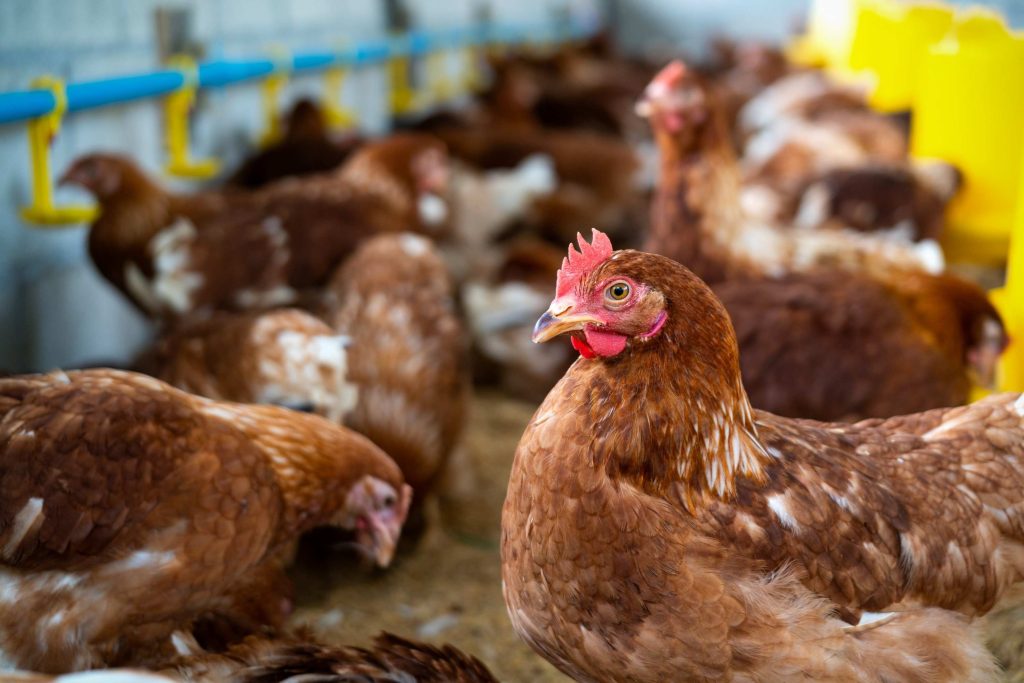
Chicken (Avian) Collagen
Collagen Source Comparison
Source | Common Collagen Type(s) | Key Sourcing Consideration | Standard Product Fit |
|---|---|---|---|
Marine | Mainly Type I | Raw material quality, traceability, and Halal sourcing | Beauty-focused formulations |
Bovine | Commonly Types I and III | Halal sourcing and animal-source documentation | Skin and broader collagen formulations |
Chicken (cartilage-derived) | Mainly Type II | Halal sourcing and animal-source documentation | Joint-focused formulations |
Collagen type varies by source tissue. The table summarises types commonly associated with these supplement sources.
The appropriate source depends on the target consumer, positioning, dosage, price point, and sourcing requirements.
Protech sources collagen peptide raw materials through its ingredient sourcing network, with relevant supporting documents reviewed during formulation and manufacturing.
Which Collagen Format Offers the Best Manufacturing Balance?
Once you define the collagen source, format becomes the next key decision. Common collagen supplement formats include powders, drinks, tablets, capsules, and jellies, each with different manufacturing and commercial considerations.
The comparison below shows how these formats differ across dosage, production, stability, shipping, and commercial requirements.
Collagen Supplement Format Comparison
Metric | Powder (Sachet/Tub) | Ready-to-Drink (RTD) Liquid | Tablet/Capsule | Functional Jelly |
|---|---|---|---|---|
Collagen dosage capacity | High | Moderate to high | Limited per unit | Limited by serving size |
Production considerations | Dry blending and filling | Liquid processing, filling, and stability | Compression or encapsulation | Heating and gelling |
Stability considerations | Low water activity | Greater microbial and formulation stability requirements | Generally stable when appropriately formulated | Moisture and texture stability |
Shipping profile | Lightweight | Heavier due to liquid and packaging | Lightweight | Lightweight |
Initial production commitment | Can be comparatively accessible | May require greater bottling setup | Depends on unit count and formulation | Depends on production process |
Commercial consideration | Strong dose-to-packaging efficiency | Convenience and premium presentation | Familiar consumption format | Novelty and sensory appeal |
These are general manufacturing considerations. Exact MOQ, dosage, cost, and production requirements vary by formulation and packaging.
Not sure what MOQ applies to your chosen format? Our guide to what first-time brand owners get wrong about MOQ explains the factors that can affect initial production requirements.
When Ready-to-Drink (RTD) Collagen Is a Good Fit
Ready-to-drink collagen can suit brands where convenience, premium packaging, or a beauty-drink occasion is central to the positioning. For brands evaluating a collagen drink in Malaysia, the format also allows consumers to take the product without mixing or preparation.
The trade-off is greater manufacturing complexity. Compared with powder, liquid formulations require additional consideration around:
- Stability and preservation
- Liquid processing and filling
- Packaging requirements
- Shipping weight and transportation
- Shorter shelf life than dried forms
For brands where convenience or presentation is a key differentiator, these additional requirements may be commercially justified.
When Tablets, Capsules, or Jellies Are a Good Fit
Tablets and capsules are portable, familiar, and easy to incorporate into existing supplement routines. However, each dosage unit can only hold a limited amount of collagen.
Where a formulation requires several grams of collagen per serving, consumers may need to take multiple tablets or capsules. These formats are therefore better suited when collagen is one component of a broader formulation rather than the primary high-dose active.
Functional jellies, meanwhile, offer another option where taste, texture, and novelty are central to the proposition. However, brands must also consider serving size, processing, and stability during formulation.
Why Powder Often Offers the Strongest Overall Balance
Powder is particularly suitable where collagen is intended to remain the primary active. For brands developing a collagen powder in Malaysia, sachets and tubs can also provide flexibility across dosage, packaging, and positioning.
Compared with other formats, sachets and tubs offer several practical advantages:
- Higher dose capacity: Several grams of collagen can be delivered in a single serving without requiring multiple dosage units.
- Fewer liquid-processing considerations: Dry formats avoid many of the processing and stability requirements associated with ready-to-drink products.
- Efficient storage and distribution: Powder packaging is generally lighter than bottled liquid.
- Flexible packaging: Single-serve sachets support portability, while tubs suit multi-serving and value-focused positioning.
Overall, powder offers a practical balance of dosage, stability, shipping, and production flexibility. However, the final format should still fit the target consumer, positioning, and sales channels.
For custom powders or sachets, a pilot research and development (R&D) batch can assess flavour, solubility, sweetness, and sensory performance before mass production.
Pondering on which collagen source or format fits your target market? Protech’s OEM collagen supplement manufacturing R&D team can help you evaluate formulation, format, and production requirements.
Turn Your Product Idea into Reality
From formulation to packaging and regulatory support, partner with
experienced OEM specialists to turn your product
idea into a market-ready brand.
How Does Collagen Formulation Affect the Finished Product?
Beyond source and format, molecular weight, complementary ingredients, flavour, solubility, dosage, and stability can influence the finished product.
Molecular Weight and Hydrolysis
Hydrolysis breaks collagen into smaller peptides. A 2024 review of hydrolysed collagen discusses how the hydrolysis process affects peptide molecular weight and properties such as solubility and bioavailability.
For OEM formulation, consider molecular weight alongside collagen source, dosage, solubility, and sensory performance.
Complementary Ingredients
Collagen can be combined with ingredients that support the intended product positioning, including:
- Vitamin C: Supports normal collagen synthesis and is commonly paired with collagen.
- L-glutathione: Commonly used in beauty-focused supplement formulations.
- Hyaluronic acid: Often included in skin hydration-focused formulations.
- Ceramides: Commonly used in formulations positioned around skin barrier support.
- Astaxanthin: Often included in antioxidant-focused beauty formulations.
These ingredients may be used in skin, hair, and nails supplement formulations depending on the intended positioning.
However, adding more actives can affect serving size, compatibility, cost, and regulatory considerations. Where collagen is the primary ingredient, its intended dosage should remain a key formulation priority.
Managing Flavour, Odour, Solubility, and Clumping
For collagen powders, sensory performance and stability also need to be considered:
- Flavour and odour: Marine collagen may require flavour masking.
- Solubility: The powder should disperse appropriately for its intended use.
- Moisture and clumping: Moisture uptake can affect powder consistency.
- Sweetener and flavour systems: These should complement the collagen source and flavour profile.
These factors can be assessed during R&D and sample development before full-scale production.
Consider Regulatory Classification Before Finalising Your Collagen Formula
Collagen products can fall within Malaysia’s food-drug interface, so consider classification before finalising the formulation and claims.
Classification can be influenced by:
- Ingredients and composition
- Dosage form
- Product presentation
- Intended claims
A collagen product may therefore be regulated by the National Pharmaceutical Regulatory Agency (NPRA) as a health supplement or fall under the Food Safety and Quality Division (FSQD) as food.
Format alone does not determine the regulatory pathway. For example, collagen powder should not automatically be assumed to fall under food requirements.
Confirming the classification early can help align the formulation, claims, labelling, and development plan.
Protech’s product registration and Halal compliance team can help determine the applicable requirements during product development.
See our guide on how long it takes to launch a supplement brand in Malaysia for a broader view of regulatory and development timelines.
Potential Market Opportunities for Collagen Brands in Malaysia
Once source, format, and formulation are defined, brand owners can focus on market differentiation.
Malaysia already has established beauty-focused collagen products, so new brands should differentiate through formulation, format, target audience, or usage occasion.
Potential positioning directions include:
- Unflavoured collagen for functional mixing: Marine or bovine collagen for coffee, smoothies, or other beverages. Powder suits this format well.
- Beauty and lifestyle formulations: Collagen paired with selected complementary ingredients for a more defined proposition.
- Joint-focused formulations: Collagen sources and supporting ingredients aligned with active or ageing consumers.
- Daily single-serve formats: Pre-portioned sachets can support convenient, consistent daily use and on-the-go consumption.
Format should support the intended positioning. Powder remains flexible across several concepts, particularly where dosage, portability, customisation, and distribution efficiency matter.
From Collagen Concept to Commercial Production

No single format fits every brand, but powdered collagen in sachets or tubs can be a practical starting point for brands prioritising higher dosage, shelf stability, and production flexibility.
Before approaching an OEM manufacturer, brand owners should define:
- Target consumer and positioning
- Preferred collagen source
- Target dosage
- Format and packaging
- Target price point
- Intended claims
- Launch timeline
When choosing a collagen supplement manufacturer in Malaysia, consider experienced and end-to-end OEM support.
Protech Health Sciences brings over 20 years of OEM health and beauty supplement manufacturing experience, supported by GMP and JAKIM Halal-certified production and an in-house R&D team.
Our capabilities include:
- Custom formulation and R&D
- Raw material sourcing
- Regulatory and Halal support
- Packaging and pilot development
- Mass production and export support
Work with Protech’s OEM specialists today to develop your collagen from concept to formulation.
Turn Your Product Idea into Reality
From formulation to packaging and regulatory support, partner with
experienced OEM specialists to turn your product
idea into a market-ready brand.
Frequently Asked Questions (FAQs)
The timeline depends on the formulation, testing, packaging, regulatory requirements, and production schedule. More complex products, or those requiring additional regulatory review, may take longer, so discuss timelines once the product brief is defined.
Potentially. Combining collagen sources depends on the intended formulation, dosage, positioning, cost, and Halal requirements. OEMs like Protech have R&D teams that can advise on the proposed blend during formulation development.
MOQ depends on product format, formulation, packaging, and production requirements. Sachets, tubs, liquids, and other formats require different manufacturing setups, so we should confirm the applicable MOQ once the initial product specifications are defined.
Potentially, but the material must meet the manufacturer's quality, documentation, formulation, and applicable Halal or regulatory requirements before it can be approved for production. Check with Protech's specialists for more information on specific sourcing requirements.
Testing requirements depend on the formulation, product format, ingredients, and applicable regulatory requirements. Depending on the product, this may include checks related to product quality, stability, microbiological safety, or other specifications before mass production.